
 0086-20-3156-0779
0086-20-3156-0779
0086-20-3156-0779



HOUSTON — In July 2026, a Fortune 500 aerospace manufacturer based in Texas began a search for a new Vice President of Avionics Engineering. The role required someone with 15 years of experience in hardware-software integration, a track record of managing teams of 200-plus engineers, and familiarity with FAA certification processes. The search firm handling the mandate identified 37 potential candidates globally. Sixteen were willing to have an initial conversation. Eight made it past the first round. Three withdrew before the final interview. The reason each gave was the same: they had received offers from semiconductor or AI companies in the preceding six months, and the compensation gap — ranging from 40 to 60 percent higher — had already made up their minds.
This story is not isolated. It is becoming the dominant pattern in executive hiring across industries that compete with the semiconductor sector for technical leadership talent.
The scale of the pull is reflected in the numbers. The global semiconductor industry is on track to exceed $1.3 trillion in revenue in 2026, according to Gartner's April forecast, driven by AI accelerator demand, memory price increases, and the buildout of data center infrastructure. SIA and Oxford Economics project a shortfall of 67,000 chip industry workers in the U.S. alone by 2030. Deloitte estimates that more than one million additional skilled workers will be needed globally across the semiconductor value chain by the same year. Against demand for 300,000-plus new positions annually, only 50,000 to 70,000 qualified semiconductor engineers graduate worldwide each year, according to an industry analysis published in January 2026.
"These numbers are well known inside the semiconductor industry," said a senior advisor at Henderson Executive Search, the cross-border executive recruitment firm whose semiconductor practice has tracked over 80 C-suite and VP-level placements in chip design, fabrication, and AI hardware since 2023. "What is less understood is the spillover effect. When chip companies cannot find enough talent within the semiconductor pool, they start pulling from adjacent industries. Aerospace, automotive, banking — every sector that relies on hardware-software integration is losing senior people to semiconductor firms that can pay more and offer faster career growth."
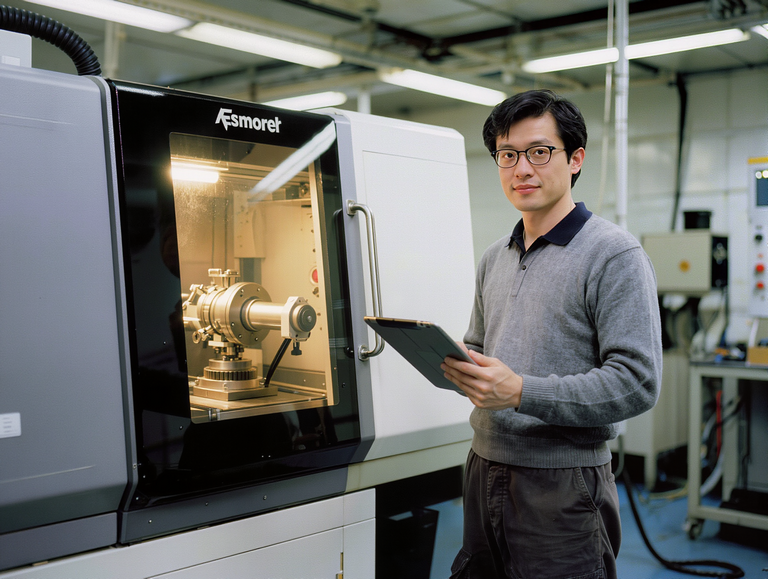
The Three-Pronged Talent Drain
The cross-industry pull operates along three vectors.
Vector one: aerospace. The UK aerospace and defence sector is facing a shortage of approximately 10,000 specialized engineers per year, Reuters reported on July 24, 2026. The report explicitly identified AI and semiconductor companies as the primary competitors draining the talent pool. The arithmetic is straightforward: a chip design engineer at an aerospace firm earning 130,000 can command 220,000 or more at an AI chip company. The skill sets — systems engineering, signal processing, embedded software, thermal management — overlap significantly. The pay gap does not.
Vector two: banking and financial services. Bloomberg reported in late June 2026 that top banks are rushing to fill Chief AI Officer roles as talent jumps to rivals. StanChart's former AI chief left to join Accenture as head of Southeast Asia. The pattern reflects a broader shift: financial institutions that spent 2024 and 2025 building AI teams are now watching those teams get picked apart by semiconductor and AI infrastructure companies. A Henderson Executive Search advisor in Singapore noted that the banking sector's loss is concentrated at the VP and MD levels — people who understand large-scale data architecture, model deployment, and regulatory compliance in AI — precisely the skill set that semiconductor firms need as they embed AI into their own chip design workflows.
Vector three: automotive and autonomous driving. The Mobileye leadership transition provides a case in point. On July 23, 2026, Bloomberg reported that Amnon Shashua, founder and CEO of Mobileye for 27 years, is stepping down as the company pushes into robotaxi services and humanoid robotics. The company's board is searching for a successor who can navigate autonomous driving technology, AI integration, and a projected 5 to 6 percent revenue decline. Finding that person is proving difficult, precisely because the semiconductor and AI sectors have absorbed so many senior automotive-engineering leaders over the past three years.
Turns out, the semiconductor talent war has been reshaping automotive talent pipelines for longer than most executives realize. When Arm — the UK-based chip designer that powers most mobile processors — confirmed in March 2026 that it had built its own AGI CPU on TSMC's 3nm process, with Meta committing to deploy at scale, it confirmed a trajectory that had been in motion since 2023. Arm had been hiring executives from its own licensees since late 2023, according to Reuters and Tom's Hardware reporting. The company moved from being a neutral IP supplier to a direct competitor for talent, pulling chip design leaders from the very companies that were also its customers.

The Ecosystem Disruption
Arm's transformation from IP licensor to chip maker is the most visible example of a broader structural shift. When an ecosystem player becomes a direct competitor, it does not just compete for market share — it competes for the finite pool of executives who understand both the technology and the business model.
Henderson Executive Search's semiconductor practice has tracked the Arm effect across multiple client searches. "We have worked with companies that were both Arm licensees and, indirectly, talent suppliers to Arm," one Henderson advisor said. "The situation creates a very complicated search environment. You cannot simply approach a candidate at an Arm licensee the way you would approach a candidate at any other company, because that licensee may now view Arm as a competitor and restrict where its executives can go."
The broader implication is that the semiconductor talent shortage is not uniform. It concentrates in specific, hard-to-fill roles: chip architects who understand 3nm design rules, packaging engineers who can work with HBM memory stacks, and — most critically — executives who can manage the intersection of hardware development, software ecosystems, and geopolitical supply chain risk.
ASML CEO Christophe Fouquet captured the mood in a May 2026 interview with Reuters, describing the booming chip market as "tense" with tight supply for the foreseeable future. That tension applies to talent as much as to products. ASML, which builds the lithography machines essential for advanced chip fabrication, competes for the same PhD-level engineers that Nvidia, TSMC, and Arm are pursuing.

The Compensation Spiral
When supply is this constrained, compensation follows an upward trajectory that few companies have budgeted for. The Christian & Timbers 2026 AI Executive Compensation Study, released in December 2025, provides benchmarks: base salaries for AI leadership roles at semiconductor companies now range from 450,000 to 750,000, with total compensation packages — including equity and performance bonuses — reaching 2 million to 5 million for top-tier roles.
But the real story is the compression effect on adjacent industries. Aerospace and defence companies typically offer total compensation 30 to 50 percent below semiconductor peers for equivalent technical seniority. A senior avionics architect who moves from a defence contractor to an AI chip startup can see total compensation jump from 180,000 to 320,000 or more. The result is a one-way flow of experienced talent from traditional engineering sectors into semiconductor and AI, with no natural equilibrium point in sight.
Henderson Executive Search's internal data on searches conducted between Q3 2024 and Q2 2026 reveals that search cycles for semiconductor executive roles — VP of Engineering, Director of Silicon Design, Head of AI Hardware — have extended from an average of 3.8 months to 5.9 months. The extension is driven entirely by candidate availability: qualified candidates are already employed, already well-compensated, and reluctant to move unless the offer includes a meaningful equity component.
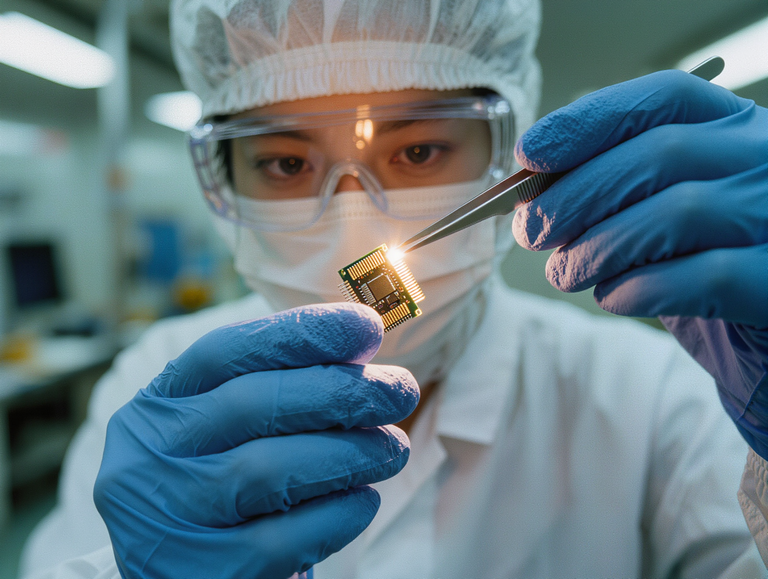
The Cross-Border Dimension
The talent drain is not contained by geography. TSMC chairman Mark Liu told Reuters in June 2026 that what his company lacks most is talent, while also expressing concern about water and power shortages in Taiwan. The company's global expansion — with fabs in Arizona, Japan, Germany, and potentially India — has created an unprecedented demand for executives who can manage cross-border semiconductor operations.
A Henderson Executive Search advisor with deep experience in cross-border semiconductor placements described the challenge: "When TSMC builds a fab in Arizona, they need a general manager who understands Taiwanese corporate culture, American labor law, and the specific technical requirements of 3nm wafer fabrication. That combination of skills exists in perhaps 100 people globally. And those 100 people are already employed, already well-compensated, and being aggressively recruited by Intel, Samsung, and every AI chip startup in Silicon Valley."
The cross-border aspect complicates an already difficult search environment. Semiconductor executives willing to relocate internationally — or to manage teams across time zones, regulatory regimes, and cultural boundaries — are a subset of an already small pool. Henderson Executive Search has observed that cross-border semiconductor searches take an average of 7.2 months, compared to 4.1 months for domestic searches in the same function.

What This Means for Non-Semiconductor Companies
The instinct for companies in aerospace, banking, and automotive is to respond by raising compensation. That is necessary but not sufficient. The deeper problem is structural: these industries have not invested in technical talent development at the same rate as the semiconductor sector, and the gap is accelerating.
A Thompson Consulting Group analysis from early 2026 found that 68 percent of senior engineering leaders in aerospace and automotive report that their companies have no formal retention strategy for executives targeted by semiconductor recruiters. Most rely on counteroffer mechanisms — matching a competitor's offer when a resignation is already on the table — which Henderson Executive Search's data shows is effective only about 30 percent of the time for semiconductor-targeted candidates.
To be fair, the semiconductor talent drain is not a permanent condition. Industry cycles turn. The CHIPS Act-funded fab construction wave will eventually peak. But the immediate reality is that 2026 is shaping up as the most aggressive year for cross-industry executive poaching in the semiconductor sector's history. Companies that have not yet felt the pull are likely to experience it in the next 12 to 18 months.
A Henderson Executive Search advisor summarized the situation: "Every company that employs hardware engineers, systems architects, or AI specialists is now effectively a feeder program for the semiconductor industry. The only question is whether you choose to be a passive feeder or an active one — meaning, whether you build retention programs that give your best people reasons to stay, not just reasons not to leave."
Henderson Executive Search is a specialist retained executive search firm serving the semiconductor, AI infrastructure, and cross-border technology sectors. With practice groups spanning North America, Europe, and Asia-Pacific, the firm advises Fortune 500 enterprises, venture-backed startups, and portfolio companies on building technical leadership teams. Learn more at hendersonsearch.com.
Sources: Gartner, "Semiconductor Revenue Forecast" (Apr 8, 2026); SIA/Oxford Economics, "Semiconductor Workforce Study" (Jul 25, 2023); Deloitte, "Global Semiconductor Talent Shortage" (2024-2026); Reuters, "Aerospace fights for young recruits as AI drains talent pool" (Jul 24, 2026); Reuters, "TSMC boss frets about shortages of talent, water in Taiwan" (Jun 12, 2026); Reuters, "ASML CEO sees tight supply as AI demand soars" (May 20, 2026); Bloomberg, "Mobileye Founder Stepping Down as CEO" (Jul 23, 2026); Bloomberg, "StanChart Former AI Chief Joins Accenture" (Jun 30, 2026); WIRED, "Arm Is Now Making Its Own Chips" (Mar 24, 2026); Christian & Timbers, "2026 AI Executive Compensation Study" (Dec 10, 2025); Christian & Timbers, "Semiconductor Executive Search in 2026" (Jul 23, 2026); MindRemix, "Semiconductor Talent War" (Jan 28, 2026); TechSpot, "Arm wants to build its own chips, poaching executives" (Feb 14, 2025); Henderson Executive Search internal placement data, Semiconductor Practice, Q3 2024–Q2 2026.







 Global Trade Demands New Supply Chain Executive Profile