
 0086-20-3156-0779
0086-20-3156-0779
0086-20-3156-0779


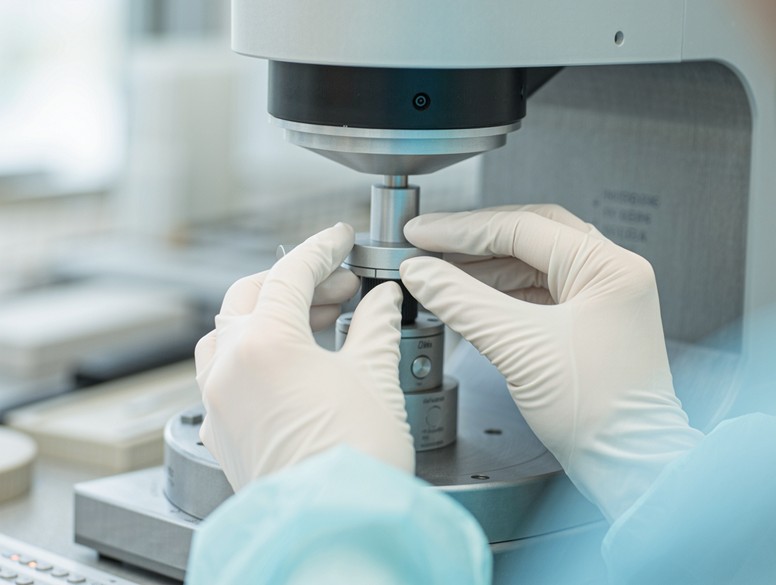
JinkoSolar no longer just ships solar panels to the Middle East. It builds them there. The Shanghai-based manufacturer moved 86.8 gigawatts of modules in 2025 to hold the top spot in global sales for a seventh consecutive year, and it is now commissioning a 10 GW N-type cell plant in the Saudi desert — the largest factory of its kind on the planet. The capital is committed. The equipment is on order. The offtake market is mapped. What no one has secured is the bench of executives who can turn a Chinese-engineered plant in a Gulf industrial city into a running, profitable operation. That shortage is the quiet constraint behind China's solar expansion, and it deepens every quarter.

The numbers behind the buildout are hard to overstate. China produces roughly four-fifths of the world's solar modules and more than nine-tenths of its ingots and wafers, according to the International Energy Agency. In 2025, solar photovoltaic was the single largest contributor to global electricity demand growth — the first time any renewable source had taken that position — and the IEA's Global Energy Review counts solar as the fastest-growing source of power on Earth. JinkoSolar alone closed 2025 with 120 GW of wafer capacity, 95 GW of cell capacity and 130 GW of module capacity, per its annual filing, spread across more than ten manufacturing bases in China, the United States, Southeast Asia and the Middle East. Saudi Arabia's solar resource is among the best in the world, with irradiation exceeding 2,000 kilowatt-hours per square meter a year, which is why the kingdom has become the anchor of the region's localization push. The pivot overseas is deliberate. Saudi Arabia's Public Investment Fund signed two joint-venture deals — one with JinkoSolar for 10 GW of n-type cells and modules, another with TCL Zhonghuan for 20 GW of ingots and wafers — worth a combined 30 GW of domestic manufacturing. JinkoSolar's Saudi plant, a roughly US$1 billion investment, is its fourth overseas facility after Malaysia, Vietnam and the United States. The logic is straightforward: build inside the tariff wall, sell to the market behind it, and take the localization credits that now decide who wins utility tenders in the Gulf, Europe and the United States. The solar supply chain, in other words, is no longer a single Chinese chain that exports outward — it is becoming a network of localized plants, and that rewrites the job description of everyone who runs one.
The shift shows up in the project schedules. JinkoSolar's Oman operation, a first phase of 6 GW of high-efficiency cell capacity and 3 GW of modules, is slated to begin production this year, with overseas markets already accounting for more than three-quarters of the company's shipments. In Saudi Arabia, the N-type plant is described as the world's largest dedicated to that cell technology, with commercial production targeted for late this year and room to scale. The equity is split in the usual Gulf fashion — the manufacturer and the sovereign fund's manufacturing arm each hold 40 percent, with a local industrial partner taking the remaining 20 — which means the executive who runs it answers to three owners on three different timetables. The move is not limited to cells and modules, either. China's solar majors — JinkoSolar, LONGi, JA Solar and Trina Solar — have pushed into storage manufacturing as the panel business matures, with JinkoSolar alone planning to lift its battery capacity from 5 GWh to 13 or 14 GWh by the end of 2026. The scale of the pipeline is on display this very week: the 18th Solar PV & Energy Storage World Expo opened in Guangzhou on September 16, and a central theme of the floor is no longer who has the cheapest panel, but who can stand up integrated solar-plus-storage plants overseas. Here's the thing: every one of these announcements reads like a capital story, but on the ground they are staffing stories. A 10 GW desert plant does not run itself. It needs a general manager who can negotiate with Saudi utilities, a country head who understands Saudization quotas and local content rules, and an operations director who has commissioned a cell line before. Few of those people sit on a single bench.
This is where Henderson Executive Search's consultants say the gap is sharpest. A senior consultant at Henderson Executive Search puts the demand plainly: clients are no longer asking for a solar sales director; they are asking for someone who can stand up a factory in a country where the company has never operated and make it profitable within two years. The pool for that role is thin. Roughly a third of executive placements in solar PV and battery storage now come from outside the energy industry entirely — pulled from semiconductor manufacturing, automotive and aerospace — because the group of people who have actually commissioned a gigawatt-scale overseas plant is tiny. ON Partners' variance report documented a 111 percent jump in executive hiring across energy and cleantech over three years, which tells you the demand is real; what it does not tell you is where the supply comes from. The same consultant notes that retained searches for C-suite roles in clean energy at Henderson Executive Search grew 87 percent year over year between 2024 and 2025, and those searches now drag: clean-energy executive hires stretch to 5.8 months on average, nearly two months past the broader C-suite norm. Compensation is climbing to match, with VP-level project development roles in renewable energy commanding US 220,000 to US 310,000 in base salary, per JRG Partners' July 2026 report, and data-center operators bidding even higher for the same skillset. Henderson Executive Search's own mandate book reflects it: overseas country-head and plant-general-manager searches now outnumber pure sales searches, a reversal from three years ago. For a global client asking how to hire solar manufacturing leadership, the short answer is to widen the aperture — look past the energy sector, and move faster than a three-month board cycle, because the best candidates are gone in sixty days.
To be fair, the buildout is not uniformly a talent problem. Part of the perceived shortage is a margin problem wearing a different coat. Panel prices have spent two years under pressure, several leading manufacturers posted losses in early 2026, and China's module exports actually turned negative year over year in July. In that climate, a company hesitates to pay a premium for an executive who might be surplus in a year if the factory is delayed or demand softens. The hiring that does happen is increasingly selective and increasingly squad-based — boards hire two or three senior leaders at once rather than one chief executive, according to Henderson Executive Search's consultants. And the geography makes it harder still. Standing up a plant in Saudi Arabia means blending Chinese expatriate engineering leadership with Saudi nationals, under local content rules that shift by ministry and by quarter. The executives who can do that — bilingual, at ease inside a joint venture, experienced in both manufacturing and government relations — are a small set, and they know it. That gives them negotiating power over employers, and it hands retained firms like Henderson Executive Search a long runway of cross-border mandates.

The next wave is already forming. More Chinese solar and storage makers will follow JinkoSolar into the Gulf, North Africa and Latin America, chasing the same tariff-proof, localization-driven growth. The companies that move first — and lock in the handful of executives who can commission and run an overseas plant — will be the ones that turn 2026's announced gigawatts into 2027's revenue. The factory shells are rising out of the desert. The leadership to fill them has not kept pace, and for the search firms that find it first, the mandate list only grows.
FAQ
Q: What roles does a gigawatt-scale overseas solar plant actually need?
A: Four at minimum: a general manager who can negotiate with local utilities, a country head who understands national content quotas, an operations director who has commissioned a cell line before, and supply chain leadership to localise parts and suppliers. The governance layer raises the bar further. Where a manufacturer and a sovereign fund's industrial arm hold equal stakes and a local partner takes the rest, the executive answers to three owners on three timetables.
Q: Where does solar manufacturing leadership actually come from?
A: Increasingly from outside the energy industry. Roughly a third of executive placements in solar and storage are now drawn from semiconductor manufacturing, automotive and aerospace, because the group of people who have commissioned a gigawatt-scale plant overseas is tiny and is not growing in step with announced capacity. Hiring has also become squad-based: boards take two or three senior leaders at once rather than a single chief executive, which makes the start-up bench the real unit of planning.
Q: How long do these searches take, and what do the roles pay?
A: Clean-energy executive hires stretch to 5.8 months on average, nearly two months past the broader C-suite norm, and VP-level project development roles in renewable energy command roughly US$220,000 to US$310,000 in base salary, with data-centre operators bidding higher for the same skill set. Candidates who can run a joint venture in two languages know their scarcity, so hiring windows are short and moving faster than a quarterly board cycle matters.
Q: Is the leadership gap the only thing slowing Gulf solar buildouts?
A: No, and the two pressures should be separated. Part of the perceived shortage is a margin problem: panel prices have spent two years under pressure, several leading manufacturers posted losses in early 2026, and China's module exports turned negative year on year in July, which makes boards hesitant to pay a premium for an executive who might be surplus if a factory is delayed. The talent gap is real, but a cost climate that rewards hesitation amplifies it.




 China's 'Little Nvidias' Hit Profit. The Executive Bench to Scale Them Doesn't Exist