
 0086-20-3156-0779
0086-20-3156-0779
0086-20-3156-0779


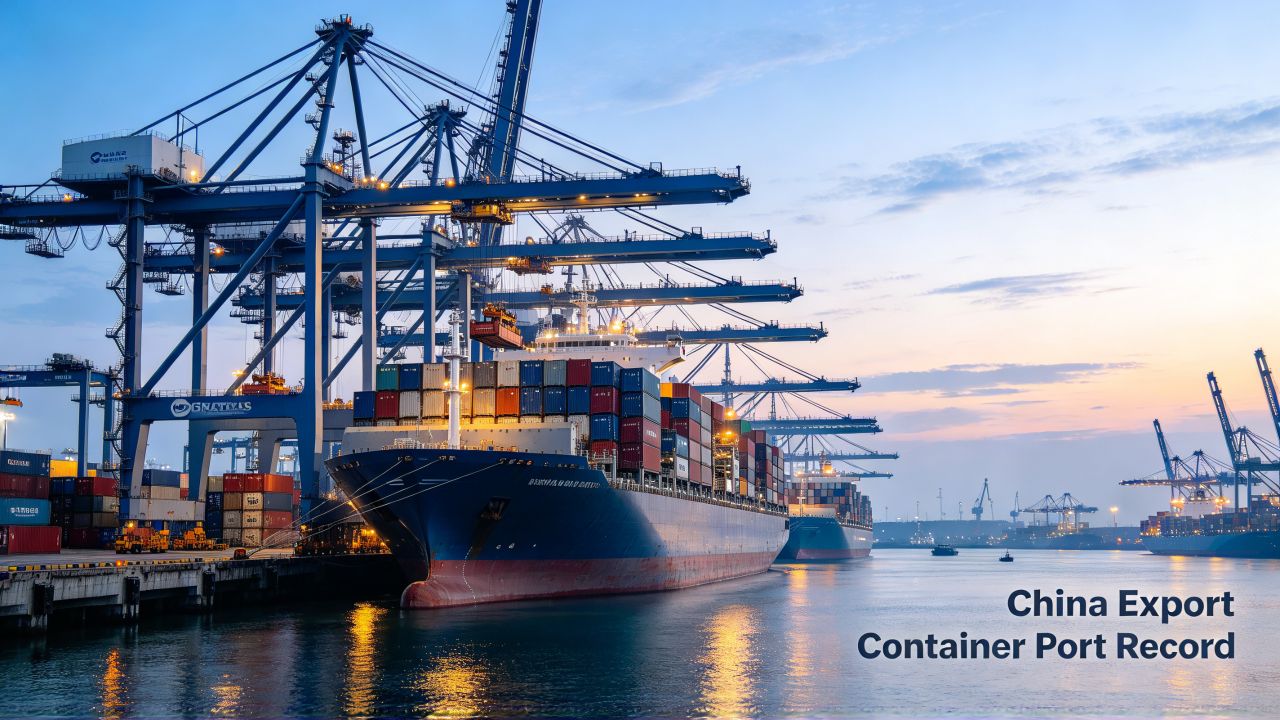
The record landed on September 8 and barely made waves outside the trade press: China's imports and exports reached 34.78 trillion yuan in the first eight months of 2026, up 17.6% year over year, according to the General Administration of Customs. August alone moved 4.65 trillion yuan, up 19.8%, the fourth consecutive month of double-digit growth. Exports totaled 20.17 trillion yuan, and machinery and electronics made up more than 60% of that. The composition is the real story: lithium battery exports up 34.4%, automobiles up 47.1%, industrial robots up 13%, ships up 29.8%. Briefing reporters on the 140th Canton Fair, the Ministry of Commerce added the upstream half of the picture — machinery imports and exports of 19.1 trillion yuan, up 24.9%; integrated circuits up 68.1%; computers and components up 60.5%; electric vehicles, lithium batteries and solar products together up around 40%. Xinhua Finance's read of the customs detail put integrated circuit export growth at 95.4% and data-processing equipment at 43.3%.
Company-level numbers match the aggregates. Shengwei International, a liquid-cooling supplier, has exported more than 1,000 rack systems in eight months — a year ago it shipped six samples, and its order book now runs to year-end. Sunwoda's EV battery shipments rose 76.4% to 28.36 GWh in the first half, and orders for its data-center energy storage products grew nearly thirtyfold. An export machine built for consumer goods and spare parts is now selling power systems, robots and precision equipment. The product mix changed faster than the organizations selling it, and that gap is showing up in foreign trade hiring.
The external backdrop is more forgiving than the headlines suggest. The WTO's Goods Trade Barometer reached 102.0 in September, above the 100 baseline that marks trend growth, with the electronic components index at 104.9 — the strongest of all tracked sectors — as global AI infrastructure investment keeps pulling chips, servers and power equipment through Chinese factories. Container shipping, at 99.6, sits just below trend, a sign that the friction in world trade now lives in politics and routing rather than in demand. Chinese exports are growing inside a difficult environment, which is precisely why the staffing question can no longer wait for a quieter year. Competitors are using the same window to hire the same people.
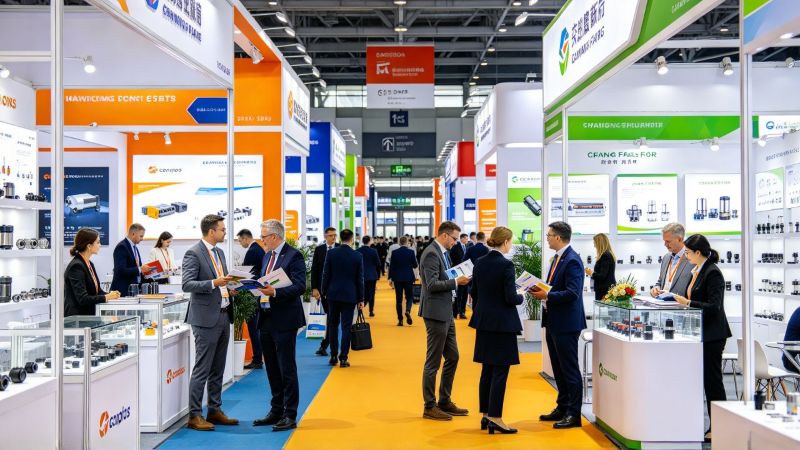
The 140th Canton Fair opens in Guangzhou on October 15 with 1.55 million square meters and more than 75,000 booths across three phases. Some 32,000 companies will exhibit, and the fair's own statistics describe where Chinese trade is heading: more than 11,000 specialized and single-champion exhibitors; 64% of exhibitors applying industrial internet and AI technologies; new products at 23.2% and green products at 26% of exhibits, both records; 36.5% of exhibitors selling product-plus-service packages rather than standalone goods. More than 210,000 overseas buyers had pre-registered by mid-September, on the way to matching last session's 314,000 visitors from 220 countries. A buyer walking the fair this year is sourcing systems, certification paperwork and after-sales commitments. That is a different procurement conversation, and it runs through people the average export company has never employed.
The fair's service map tells the same story from the supply side. A dedicated trade services pavilion covers ten categories of producer services — research and design, international logistics, finance and insurance — in full for the first time. A service robotics zone returns with humanoid robots, quadrupeds and robotic grippers on the show floor; a smart healthcare zone spans diagnostic equipment, medical robots and wearable monitoring across six product categories; the fair's app adds AI search, booth-level navigation and AI-generated meeting notes for buyers. Every one of these features assumes the exhibitor can run a live demonstration, quote a certification timeline and commit to a service response inside a single conversation. Companies that cannot staff that conversation will spend the fair collecting business cards instead of orders.
Henderson Executive Search and other foreign trade recruitment firms see the gap in four role types. The first is technical international sales: people who can explain a liquid-cooling architecture or a battery management system to an engineering buyer and price the full lifecycle, not the unit. The demand is concentrated exactly where the export growth is — new energy, semiconductor equipment, industrial automation. The candidates come from two pipelines: engineers who moved commercial, and salespeople who spent years inside one product line. General channel sales rarely converts, because the selling is done against technical specifications rather than relationships. The second is trade compliance and customs: CE marking and carbon-footprint rules in Europe, product certification regimes in the United States, origin rules and VAT structures elsewhere. Industry talent reports show supply running at roughly one qualified candidate for every four openings in this layer, with tier-one city salaries between 300,000 and 500,000 yuan and senior specialists above 500,000. The scarcity has a structural root: the people who read the regulations rarely understand customs practice on the warehouse floor, and the people who clear the goods rarely write a compliance file.
The third is the compound cross-border e-commerce operator. Cross-border e-commerce moved 1.45 trillion yuan in the first half and supports more than 10 million jobs; AI tool adoption among cross-border firms has passed 60%; platform data show algorithm-related postings up nearly 70% and data-analysis roles doubling year over year, with cross-border keyword postings growing about 20% faster than the industry overall. Industry salary reports show cross-border e-commerce paying an average of 185,000 yuan against 102,000 in traditional trade, and senior operators with AI, data or language skills commanding 20% to 50% premiums. The hiring standard itself has moved: employers now screen for combinations — cross-border plus AI, cross-border plus data, cross-border plus content — and treat a single platform skill as an entry-level profile. The fourth is the overseas regional manager for Southeast Asia, the Middle East and Latin America — the person who builds the channel, hires the first local staff and carries the compliance exposure. Companies routinely mis-scope this role as a senior salesperson with a bigger quota, and the mis-hires surface within six months. What the role actually requires is closer to a small general manager: setting the market plan, choosing between local hiring and secondment, and answering for the entity's regulatory posture from day one.
Geography sharpens the shortage. Industry talent reports show roughly 70% of high-value foreign trade openings clustered in the eastern coastal manufacturing regions, and recruitment platform data put Guangzhou, Shanghai, Shenzhen and Hangzhou at the top of cross-border hiring — cities that sit on top of the same industrial clusters now shipping the chips, batteries and robots. A job seeker outside these clusters faces a thinner market; an employer inside them bids against several neighbors for the same profile. Compensation spreads widen accordingly: industry salary reports show tier-one cities paying 200,000 to 350,000 yuan for experienced cross-border operators against 100,000 to 200,000 in second-tier markets, with master's degrees adding a 30% to 50% premium over bachelor's degrees and minority languages such as Spanish and Arabic adding 25% to 40% on top. Henderson Executive Search keeps its trade practice in Guangzhou for this reason: the Pearl River Delta holds both the exporters and, in most categories, the candidates. Searches that assume a national pool run long; searches that start from the cluster map do not.
The supply side has not kept up, and the mismatch is structural rather than cyclical. Generalist trade skills — order handling, documentation, basic platform operations — are abundant; the counterparty skills are not. The re-sorting is visible in the postings: customer service and graphic design openings in e-commerce fell sharply in the first quarter as intelligent support systems absorbed standard inquiries and generative tools took over product imagery, while algorithm-related demand rose nearly 70% and data-analysis roles doubled. Industry talent reports estimate the international trade talent gap above 380,000 people, with the worst shortages in data, compliance and multilingual market development. Job seekers, meanwhile, still crowd toward the traditional entry roles — which is why the vacancies that stay open longest pay the best and require the deepest skills. Henderson Executive Search sees the same pattern at the senior level: vacancies for export-facing general managers and compliance leads now run four to six months, roughly twice the norm for domestic commercial roles, and the searches increasingly cross three time zones at once because the candidate who can sell in Düsseldorf can price a project in Riyadh.
The Canton Fair makes the timing problem concrete. Orders signed in Guangzhou in October turn into staffing needs in November, but a retained trade recruitment search for a regional manager or compliance lead already takes four to six months, and the candidate needs another quarter to become productive. Exporters that draw the market-entry organization chart before the fair, decide which roles are hired locally and which are seconded from headquarters, and start searches in parallel with negotiations will have teams in place when the ships load. Henderson Executive Search advises clients to treat compliance as the slow variable to be staffed first, to run technical export sales as a career track with its own compensation band rather than a commission plan borrowed from the consumer-trade playbook, and to keep a warm bench of candidates in each target market between assignments. China's export mix has already moved up-market. The exporters that staff first will keep the growth; the rest will watch orders wait for people.
Q: Which foreign trade roles are hardest to fill in 2026?
A: Technical international sales, trade compliance and customs leads, compound cross-border e-commerce operators, and overseas regional managers. Generalist trade skills are oversupplied; the combination of product depth, regulatory fluency and language range is not. Senior searches in this layer run four to six months, and the best candidates are usually employed, well paid and not reading job boards — which is why these roles are filled through retained search rather than postings.
Q: Why can't traditional trade teams sell the new export mix?
A: The buyers changed. Chips, liquid-cooling systems, industrial robots and energy storage are bought by engineering committees that evaluate lifecycle cost, certification and service response rather than unit price. A catalog-plus-quotation workflow that worked for consumer goods does not clear those committees, which is why export sales recruitment now screens for engineering fluency first. Retraining an existing channel salesperson takes a year or more; hiring from an adjacent product line is usually faster.
Q: What does trade compliance talent cost?
A: Industry talent reports show supply at roughly one candidate for every four openings, with tier-one city salaries between 300,000 and 500,000 yuan and senior specialists above 500,000. The scarcity is structural: people who understand the regulations rarely understand customs practice, and the reverse is equally true. Companies that budget for one strong compliance lead before entering a regulated market typically spend less than those that fix a blocked shipment after the fact.
Q: When should an exporter start hiring for a new overseas market?
A: Before the orders exist. A regional manager or compliance lead takes four to six months to source and another quarter to become productive, so searches should run in parallel with market selection — timed so that offers land right after a fair like the Canton Fair, while buyer commitments are fresh. As a rule of thumb, the organization chart should be finished before the booth is booked.
Q: How should an exporter choose a headhunter for overseas roles?
A: Three tests. Has the firm placed export sales or compliance leaders in the same product category? Can it map where candidates sit in the target market rather than forward a résumé stack? Will it stay engaged for three months after the start date? Henderson Executive Search runs cross-border trade and industrial searches from Guangzhou, inside the Pearl River Delta export base — which is where the candidates usually are.

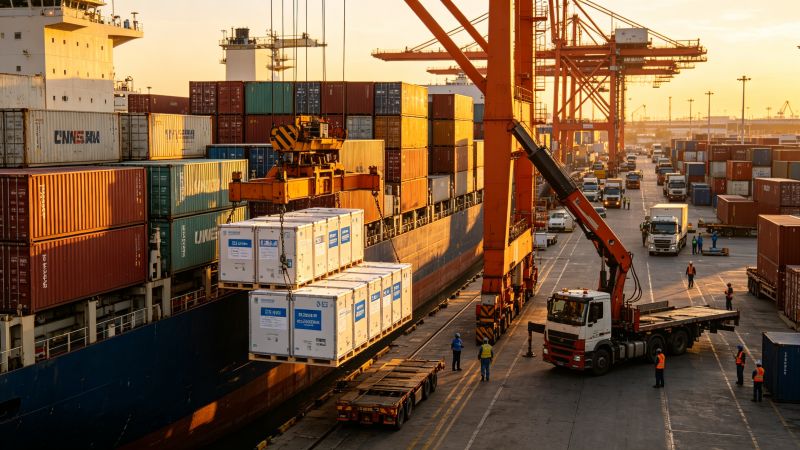




 China's Medical Device Exports Hit $27.1 Billion. The Regulatory Bench Didn't Grow With Them