
 0086-20-3156-0779
0086-20-3156-0779
0086-20-3156-0779


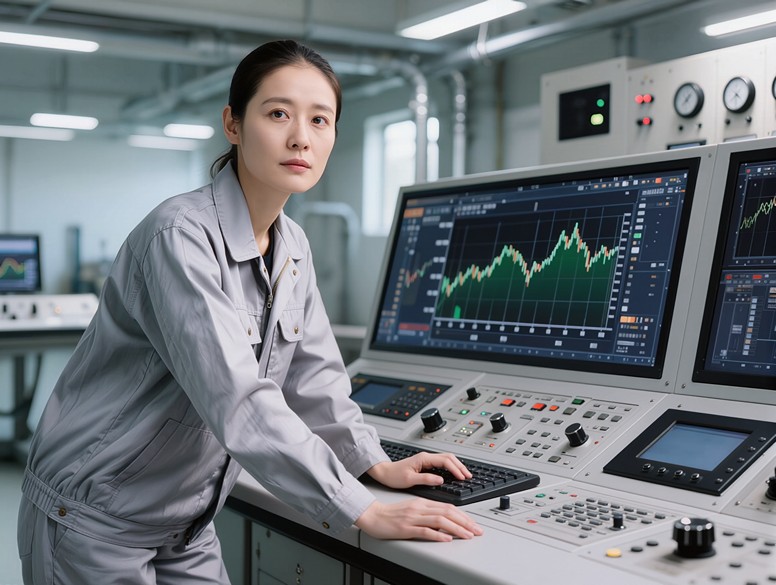
The machines are now the cheap part of green hydrogen. The bottleneck has moved to the people who turn export orders into operating plants.
Chinese electrolyzer makers shipped at least 321.25 megawatts of equipment overseas in the first half of 2026, a seventeen-fold jump from the 18.5 megawatts they exported in the same stretch of 2025, according to shipment data compiled by industry trackers. The country now builds roughly 60 percent of the world's electrolyzers — the machines that split water into hydrogen using renewable electricity — and its renewable hydrogen capacity already accounts for more than half of the global total, per the National Energy Administration's China Hydrogen Energy Development Report released in August. Here's the thing: the bottleneck in the green-hydrogen buildout is no longer the hardware. It is the people who turn a factory order into a working, financed, contracted project. That layer of the industry barely exists yet.
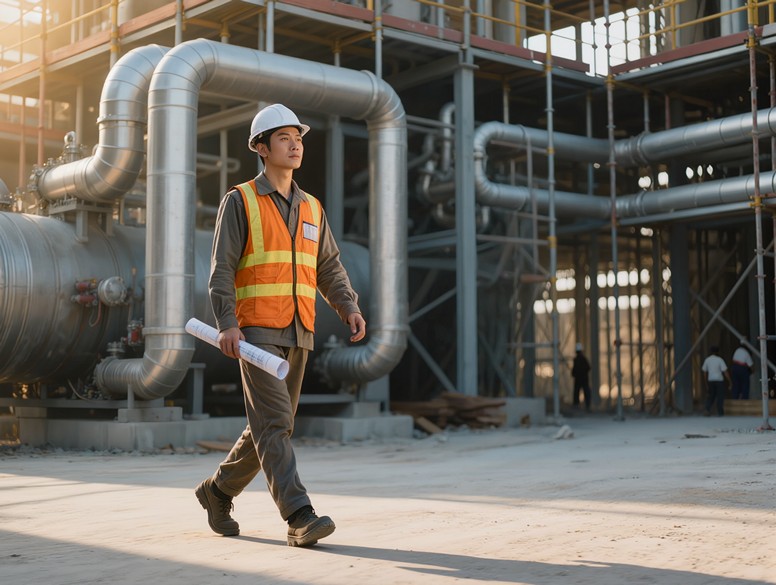
The scale keeps compounding faster than the org chart. China's installed solar capacity is expected to surpass coal for the first time in 2026, and clean energy crossed 52 percent of installed power capacity in February, according to figures cited by China Daily. Beijing has thrown policy weight behind the shift: in March 2026 three ministries jointly launched a national pilot for comprehensive hydrogen applications, with a hard target of cutting end-user hydrogen below 25 yuan per kilogram — about $3.60 — by 2030. On the supply chain side, the numbers are just as lopsided. Alkaline electrolyzer bids have fallen to roughly 375 yuan per kilowatt, and East Asia, dominated by China, now holds over 60 percent of global electrolyzer manufacturing capacity, according to energy-sector supply chain analysts. China is already the world's largest hydrogen producer at roughly 35 million tonnes a year, though more than 97 percent of that is "grey" hydrogen made from fossil fuels — which is exactly why the green buildout matters. In 2025 the country had about 250,000 tonnes a year of renewable green hydrogen in operation, a fuel-cell vehicle fleet of around 30,000, and 560 refuelling stations, according to an industry deep-research report from Faxiangongchang. Final investment decisions for hydrogen projects worldwide doubled over the past year with China leading the way, according to the International Energy Agency. The cost advantage is now an export in its own right: a kilowatt of Chinese alkaline electrolyzer capacity costs a fraction of what Western equivalents quote, which is why the hardware keeps winning tenders from Oman to Brazil. The equipment stopped being the scarce input. The scarce input is now the person who can stand a project up overseas and keep it running.
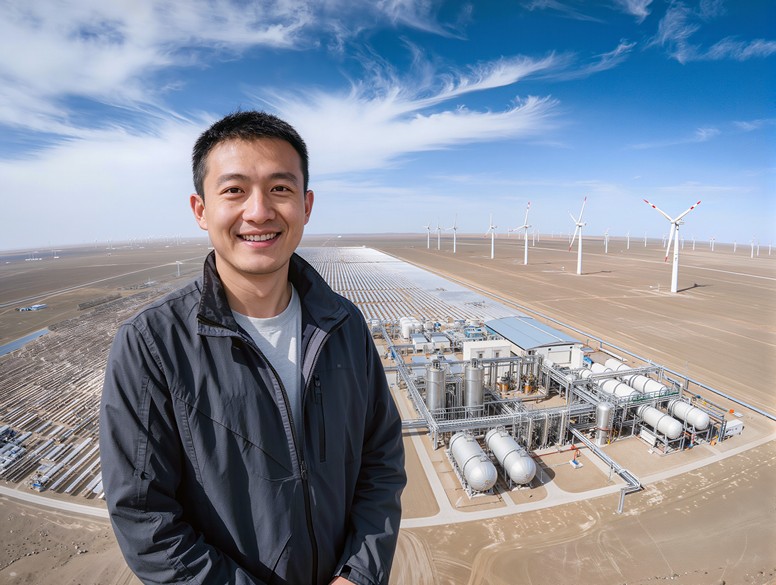
Sungrow Hydrogen, the hydrogen arm of the Chinese inverter maker, shows what the expansion looks like on the ground. In March 2026 it shipped 160 megawatts of alkaline electrolyzers to ACME Group's green ammonia project at Duqm in Oman, serving as the project's primary equipment supplier, with the first phase targeting 100,000 tonnes of ammonia a year and commissioning set for the end of 2026. The same manufacturer delivered electrolysis systems to projects in Italy and Brazil within the same window — three continents in a single quarter. Other Chinese suppliers won electrolyzer packages for a geothermal-powered green fertilizer project in Kenya led by the Kaishan Group. PERIC, a unit of the CSSC shipbuilding group, has scaled toward 6.5 gigawatts of electrolyzer capacity, while LONGi's hydrogen business chases the same international orders. Egypt is emerging as another beachhead, with Chinese firms joining large integrated green-hydrogen developments alongside European developers building export-oriented supply chains, according to regional trade reporting. Chinese renewable ammonia is now being offered into Europe below $700 a tonne on a free-on-board basis, according to S&P Global Commodity Insights — a price Western developers have struggled to match. The pattern is consistent: the machinery is Chinese, the project structure is international, and the leadership layer has to be rebuilt from scratch in every new market. The cross-border sales are landing. The cross-border operating layer is not.
The hardware is winning the argument. The org charts are losing it. Building an electrolyzer in China and delivering a green hydrogen project in Oman or Egypt are two different jobs, and the industry is only now discovering how few people can do the second one. A green hydrogen project needs an executive who can secure an offtake agreement — the contract that convinces lenders to finance the plant — while managing engineering, procurement, and construction in a jurisdiction they have never operated in. Consultants at Henderson Executive Search, which runs an energy and cleantech practice for Chinese manufacturers expanding abroad, say the people with that exact combination are vanishingly rare. At Henderson Executive Search, the team describes two talent pools that almost never overlap. One is the manufacturing pool: chemical and electrochemical engineers who can run an electrolyzer line in Jiangsu or Hebei. The other is the project-finance pool: bankers and developers who have closed wind or solar farms in Europe and the Gulf. A green-hydrogen executive has to sit in both pools at once. The same consultants add that when a Chinese electrolyzer maker lands its first contract in a new country, the first hire is almost always the hardest, because there is no internal candidate and no obvious external one. An electrolyzer engineer understands membranes and cell stacks. A project developer understands permitting and power purchase agreements. Almost nobody has spent a career doing both, because green hydrogen as a commercial business is barely five years old. Henderson Executive Search's consultants describe the search as hiring for a job description that did not exist eighteen months ago.
To be fair, the seventeen-fold export jump is still from a tiny base. Eighteen megawatts is a rounding error next to the 58 gigawatts of nameplate electrolyzer capacity China already lists, and much of the sector's recent history is a story of projects slipping or quietly shelved over offtake and cost. That, however, is exactly why the talent question matters. The manufacturing problem is largely solved; a senior consultant at Henderson Executive Search points out that the binding constraint has shifted from technology to execution, and execution is a human problem. Chinese firms now win on price in nearly every bid. What they cannot buy off a shelf is the country manager who has closed an offtake deal in Riyadh, or the project director who has commissioned a plant under Middle Eastern labor and customs rules. The irony is plain: the country that solved the cost of the hardware is now hitting the one constraint no factory can mass-produce. The same scarcity is surfacing on the Western side, where developers who once promised hydrogen at scale now compete for the same small pool of project-finance and commissioning talent — often bidding against the very Chinese suppliers whose equipment they buy. Those executives are scarcer than the engineers — and harder to poach, because the role is still being invented.
The green-hydrogen buildout will not be won by the cheapest electrolyzer. It will be won by the companies that staff up on project development and delivery leadership before their rivals do. Consultants at Henderson Executive Search describe a market where a handful of mandates — a regional general manager here, a head of project delivery there — now decide which manufacturers turn export orders into operating assets. Henderson Executive Search has begun advising Chinese cleantech exporters on building precisely that bench. The machines are ready. The bench is not.
Sources: National Energy Administration, "China Hydrogen Energy Development Report 2026" (Aug 11, 2026); China Daily, "Solar power capacity to surpass coal for the first time in 2026" (Apr 29, 2026); energy-solutions.co, "East Asia Electrolyzer Refinery: Manufacturing & Scaling Dynamics" (2026); Faxiangongchang, "China Hydrogen Energy Deep Research Report 2026" (Jun 4, 2026); International Energy Agency, hydrogen investment analysis (2026); Energetica India, "Sungrow Ships 160MW Electrolysers for ACME's Green Ammonia Project in Oman" (Mar 24, 2026); China Hydrogen (Jian Wu), "Chinese Electrolyser Export Orders Accelerated in H1 2026" (2026); S&P Global Commodity Insights, "Chinese renewable ammonia targets Europe with sub-$700/t FOB offers" (2026); AmorA Insights, "Green Hydrogen: China's Electrolyzer Manufacturers Go Global" (2026).



 Structural Scarcity Drives Reset in Senior AI Executive Compensation