
 0086-20-3156-0779
0086-20-3156-0779
0086-20-3156-0779



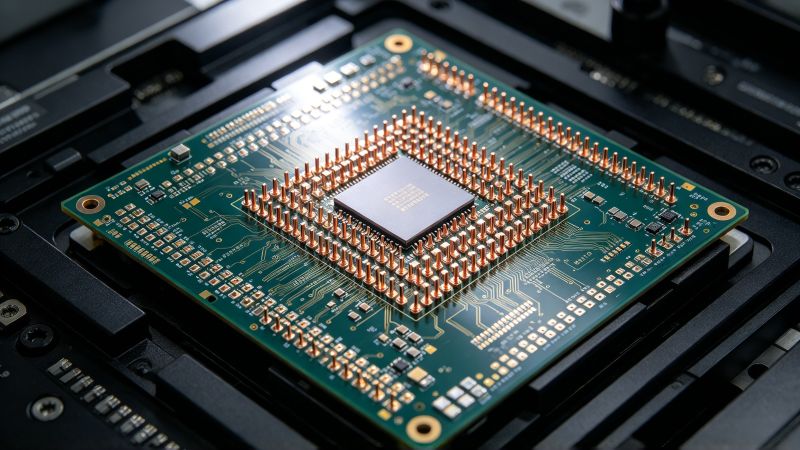
In the first seven months of 2026, China exported $216.02 billion worth of integrated circuits, a 99.5 percent jump from a year earlier. That figure, released by the General Administration of Customs, quietly recast what the country sells to the world. Chips are no longer something China mostly buys. They are now one of its biggest exports.
The growth is not a rounding error. In the first half alone, China shipped 179.44 billion integrated circuits worth $177.28 billion, nearly double the same period last year, according to customs data cited by Tom's Hardware. Semiconductors have climbed past the old "new three" of electric vehicles, batteries, and solar panels to become a pillar of the country's trade. Economists already have a phrase for it: the "new new three," a successor to the export categories that defined the last cycle. Integrated circuits now sit at the top of that list. Here's the thing no one talks about: the factories are running, the orders are booked, and the executives who can sell all of it abroad are not there.

The scale is hard to overstate. TrendForce, the Taiwan-based semiconductor research house, put integrated-circuit exports at 304.7 billion yuan in January and February alone, up nearly 70 percent from the same stretch of 2025. The firm attributes the surge to what it calls the scale effect of mature-node production—the 28-nanometer and older chips that run cars, appliances, and industrial machinery—rather than premium pricing on leading-edge designs.
China still trails the United States in the most advanced chip manufacturing. That gap is real and widely documented. What changed is the volume beneath it. IDC projects China's mature-process market, chips at 22 nanometers and above, will approach 40 percent of global share by 2030, up from 30 percent in 2023. That is not a forecast to shrug off. It is a supply chain being rebuilt in real time.
The domestic industry is expanding to feed it. The China Semiconductor Industry Association put 2026 output above 1.5 trillion yuan, up 14 percent year over year. SEMI, the equipment industry's trade group, recorded a 25 percent rise in China's semiconductor equipment spending in the first quarter. More than 15 new wafer fabs are scheduled to come online between 2026 and 2028.
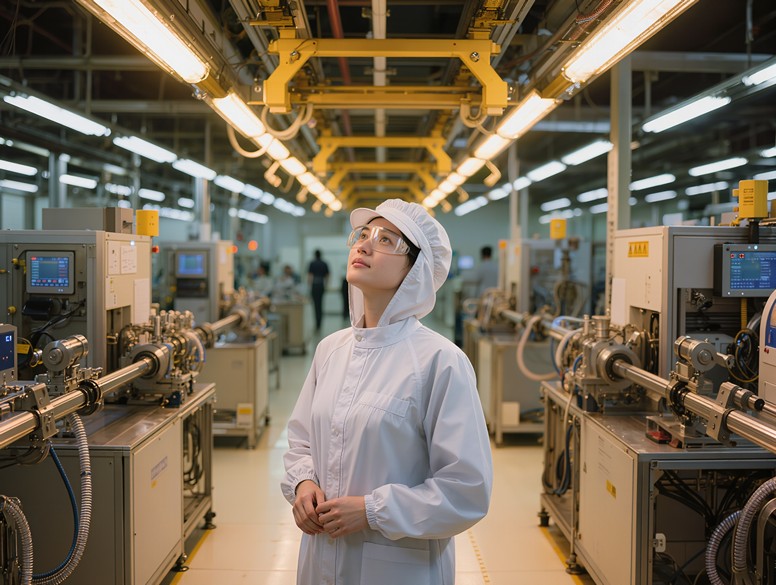
The companies behind the surge form a short, familiar list. SMIC, the country's largest contract chipmaker, and Hua Hong have spent the year filling orders for mature-node chips no one else can produce fast enough. Yangtze Memory and ChangXin Memory have pushed into a memory market long controlled by Korean rivals. Huawei's chip design arm has kept its AI silicon moving through domestic fabs at a pace the market has rarely seen.
Those exports are not heading to a single place. Mature-node chips power the electric vehicles, home appliances, and industrial sensors that manufacturers across Southeast Asia, Europe, and the Middle East assemble by the millions. A chip that costs a few cents inside a refrigerator or a car's window motor is exactly the kind of product China can now make faster and cheaper than almost anyone—and ship in volumes that reshape a balance sheet.
Each of those expansions carries a staffing bill. A new wafer fab is not just cleanroom space; the China Semiconductor Industry Association estimates each one needs 500 to 800 engineers before it ships a single wafer. Multiply that across 15 fabs and the arithmetic stops being comfortable.
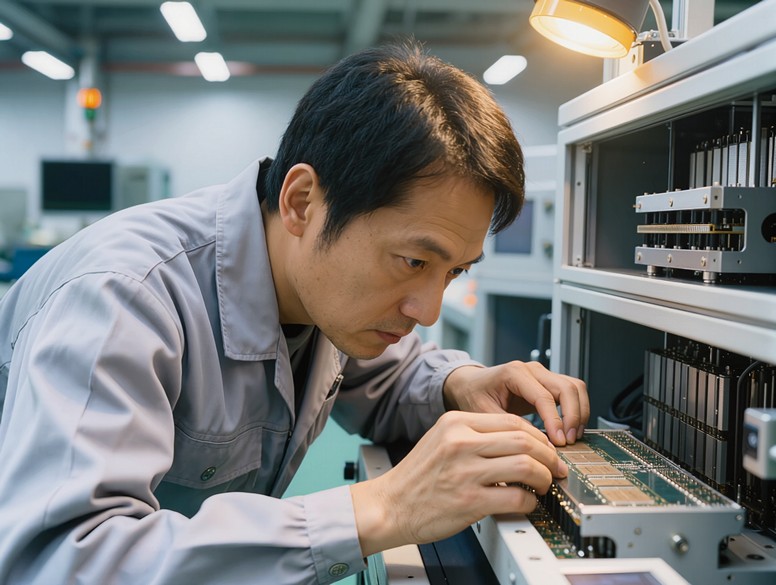
What the export boom adds on top is a second, less obvious layer of demand: commercial leadership. Selling a Chinese chip to a carmaker in Stuttgart or an appliance brand in Osaka is not the same job as making the chip. It requires executives who understand global pricing, international export compliance, and foreign customers—people who can sit across the table from a buyer who has never sourced from China.
The talent math is stark. The China Semiconductor Industry Association puts the industry's total shortfall at roughly 300,000 people, with universities graduating far fewer integrated-circuit engineers each year than the industry needs. A senior consultant at Henderson Executive Search, which places executives across China's semiconductor sector, describes the shortage in two layers.
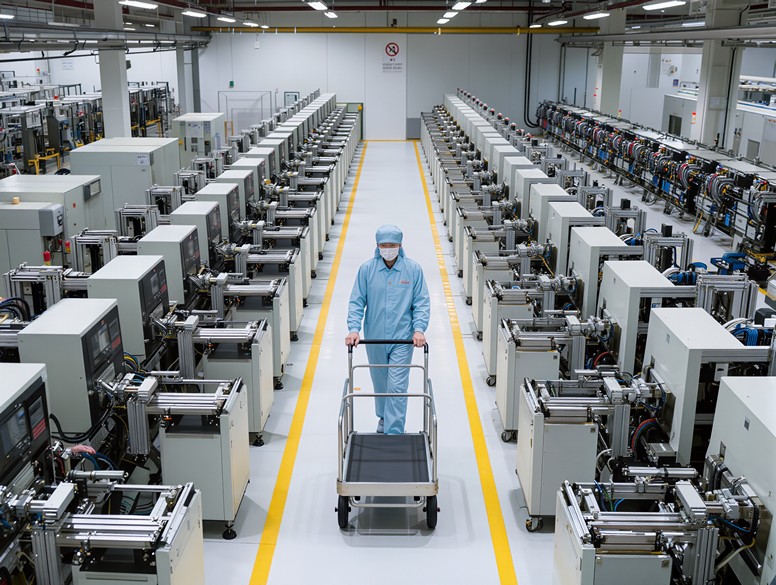
The first is technical and widely reported: process engineers, equipment engineers, and packaging specialists. Consultants at Henderson Executive Search see senior process roles in cities like Wuxi and Suzhou now commanding annual packages of 1.5 million to 3 million yuan—figures that would have been unthinkable five years ago. Henderson Executive Search's consultants have watched those packages climb for three straight years as Shanghai and Shenzhen fabs bid against each other for the same names. A Suzhou power-device fab raised an offer for a senior process-integration engineer from 450,000 yuan to 700,000 yuan, one consultant at Henderson Executive Search recalled, and the candidate still took a rival memory maker's counteroffer. That story repeats itself up and down the Yangtze River Delta.
The second layer is the one Henderson Executive Search flags as the emerging bottleneck: global sales, supply chain, and export-compliance executives who can carry Chinese chips into foreign markets. Five years ago a Chinese chipmaker's commercial team mostly sold at home. Today the same firms are hiring country heads for Europe, sales directors for Southeast Asia, and compliance officers who can navigate export rules across a dozen jurisdictions—profiles that barely existed in China's chip industry before 2023. A fab can hire 500 engineers and still stall, a consultant at Henderson Executive Search said in reviewing recent mandates, because no one on the commercial side can open the overseas accounts. Demand for bilingual commercial leaders, the firm notes, has outpaced the candidate pool several times over since last year.
To be fair, the export surge is not the same as technological dominance. Nearly all of the growth sits in mature nodes, where China competes on scale and price rather than on the frontier. The most advanced chips still come from Taiwan and, increasingly, from a United States that has spent hundreds of billions to keep it that way. A sales bench can move mature chips; it cannot conjure leading-edge lithography.
There is a subtler risk too. Export growth built on the scale effect is, by definition, growth built on thin margins. When every rival is also adding mature-node capacity, the pricing power evaporates. Nor is the talent gap purely a numbers game. The commercial executives these firms need must hold two identities at once: fluent in the cost discipline of a Chinese fab and credible in the boardrooms of foreign customers. That pool is small, and it does not grow quickly, because the roles barely existed at scale five years ago. The executives Henderson Executive Search places today are being asked to defend margins in a market that may be oversupplied within three years—which is precisely why commercial and supply-chain leadership, not just technical skill, has become the scarce asset.
The trajectory, for now, points one direction. China's chip exports are on pace to clear $400 billion for the full year, a number that would have been dismissed as fantasy at the start of the decade. Whether the country builds the executive bench to sell, distribute, and defend that position is the question the numbers cannot yet answer. Henderson Executive Search expects the search mandates to keep climbing with the export figures.
---
Sources: General Administration of Customs (China), integrated circuit export statistics for the first half and January–July of 2026; Tom's Hardware, "China claims chip exports nearly doubled to $177 billion in the first half of 2026" (July 14, 2026); TrendForce, "China IC Exports Hit 304.7B Yuan in Jan–Feb 2026, Up Nearly 70% as AI Lifts Mature Node" (March 11, 2026); IDC, mature-process semiconductor market share projection (2026); China Semiconductor Industry Association, 2026 industry output, talent gap, and wafer-fab expansion estimates; SEMI, China semiconductor equipment spending (Q1 2026).





 The Machines Are Cheap. Green Hydrogen’s Bottleneck Is People