
 0086-20-3156-0779
0086-20-3156-0779
0086-20-3156-0779




The Involution Ends
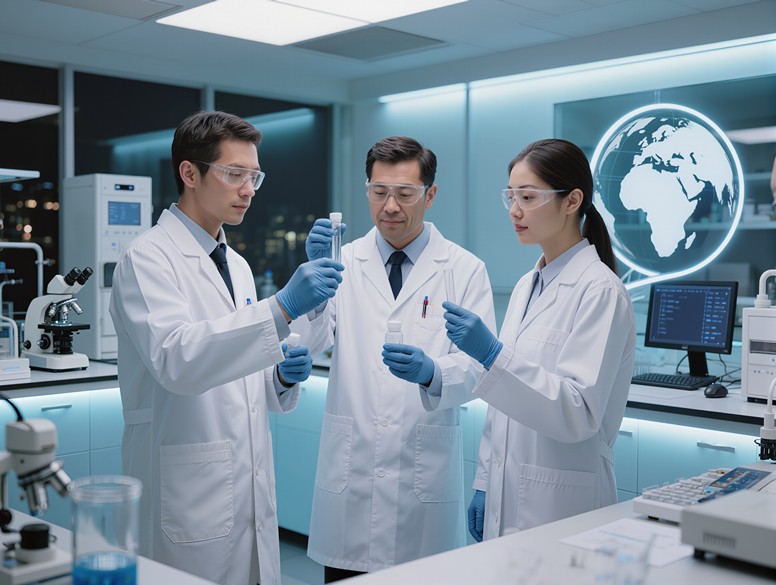
For most of the past decade, the story of Chinese biotech was a story of crowding. Hundreds of companies chased the same handful of targets — PD-1 antibodies, HER2 inhibitors, CAR-T therapies — in a domestic market where reimbursement kept pressing prices lower. The Chinese word for it, neijuan, or "involution," became shorthand for a sector that worked harder while earning less. In the first half of 2026, the narrative flipped. Global drug companies began treating China not as a source of cheap copies but as the world's most productive supplier of licensable drug candidates. Here's the thing: the sector that spent a decade competing on price has become the one the West now competes to buy from.

A Wall of Numbers
The figures are hard to argue with. China's Ministry of Industry and Information Technology said total out-licensing deal value in the first half of 2026 exceeded 100 billion, a record, in a release published in late July. Reuters, citing state broadcaster CCTV, put the six-month total at roughly 110 billion. The National Bureau of Statistics reported separately that first-quarter out-licensing value alone surpassed 60 billion. Even allowing for the fact that these totals count potential milestone payments and royalties rather than cash in hand, the trajectory is steep: a market that licensed out roughly 136 billion across all of 2025, per an industry tally by Vision Life Sciences, booked more than half that amount in a single quarter this year. The same MIIT briefing added that 38 new drugs won marketing approval in the period, 31 of them from domestic companies — evidence that the licensing boom is fed by real science, not just deal-making. What makes the run striking is the direction as much as the size. Five years ago analysts described Chinese biotech as stuck in me-too competition, churning out near-identical drugs for a crowded home market. The same industry has now aged into first-in-class and best-in-class candidates that multinational buyers are willing to pay for. The patent cliff explains the appetite: with blockbusters losing exclusivity in Western markets, global buyers need fresh assets, and China supplies them at a lower discovery cost thanks to a mature research and manufacturing supply chain. The licensing run is not a one-off windfall but a structural shift. Where Chinese companies once competed on price in a crowded home market, they now compete on differentiation abroad, and the out-licensing surge is the clearest measure of that reversal. It spans several exit routes — straightforward licensing, the NewCo structure, and self-funded overseas development — which together signal that the industry's overseas push has matured beyond a single deal type.

The Deals Behind the Total
Individual transactions tell the story better than any aggregate. In June 2026, Hansoh Pharmaceutical licensed its IL-23 receptor antagonist HS-20118 to Avere Therapeutics in a deal worth more than 2.3 billion — and, notably, Hansoh's first NewCo structure, in which the Chinese licensor keeps a stake in a freshly formed overseas company rather than simply handing over rights. That deal lifted Hansoh's cumulative out-licensing to seven drugs, with partners including GSK, MSD, and Regeneron and a combined disclosed value above 12 billion, according to the company's interim results. The financial payoff is already visible on the income statement: Hansoh's new-drug revenue reached about 7.09 billion yuan in the first half, a record 85.4 percent of total revenue and up 21.6 percent from a year earlier. Hengrui Medicine, the sector's largest player, adopted a NewCo model for its HRS-1893 program, while Harbour BioMed completed 17 business-development deals, more than any other Chinese drug maker, per a report in Time Weekly. Pfizer and Merck were among the buyers Chinese media described as "sweeping up" assets. The NewCo structure matters because it changes what Chinese companies keep from a deal: a stake in the upside, not just a royalty stream. The appeal of NewCo is straightforward. It lets a Chinese company keep equity in a program while foreign venture capital funds the expensive overseas clinical work, spreading risk that a smaller domestic firm could not carry alone. For the founders and scientists involved, it also turns a licensing fee into a possible equity payoff, which changes who is willing to lead these programs.
The Talent Gap Nobody Planned For
For Henderson Executive Search, a China-based firm that places senior executives for global clients, the boom has produced an unplanned bottleneck: the people who close these deals. A senior consultant at Henderson Executive Search observed that moving from domestic competition to cross-border licensing demands a new kind of executive — one who understands Chinese drug assets and Western deal structures in the same conversation. Henderson Executive Search's life-science practice has seen searches for heads of business development and clinical development climb as companies rush to staff overseas-facing teams. According to a consultant at Henderson Executive Search, the shortage is not of scientists but of executives with global trial experience and the standing to negotiate with multinational partners. Henderson Executive Search now runs more cross-border BD mandates than any other life-science role, its consultants report. The problem has a second layer, the firm says: clinical leaders who can run registrational trials to Western regulatory standards are scarce, and they are being pulled in two directions at once — one foot in Boston, one in Shanghai. The gap is partly generational. The executives who built China's domestic biotech boom spent their careers on fast-follow development for a home market; the ones who can run a global registrational program or structure a cross-border NewCo are a smaller, newer cohort. That mismatch is what the firm's clients keep running into, and it is why a single senior hire can now unlock a deal that has been sitting unsigned for a year. A consultant at Henderson Executive Search summed up the mismatch in plain terms: a company that closes a nine-figure licensing deal still needs someone to run the overseas development program it just promised, and that person often does not exist inside the company yet.

That Said
That said, the headline number flatters the reality in one important way. Most of the $100 billion is contingent — milestone payments tied to clinical outcomes that may never arrive, plus royalties that depend on future sales. The upfront cash Chinese companies actually banked is a fraction of the total, so a record deal value is not the same as a record income statement. There is also a question of durability. A licensing deal monetizes an asset; it does not build an organization. If Chinese biotech wants to graduate from selling assets to running global companies, it will need the very executives now in shortest supply. Henderson Executive Search's consultants point to a telling detail: the same candidate who closes a NewCo deal in Boston one week can be recruited to lead a Chinese company's entire overseas operation the next, and the pool of people who can do both is small. Turns out, the science scaled faster than the leadership.

The record is unlikely to be the last. With patent cliffs still ahead and Western buyers still hungry for differentiated assets, Chinese out-licensing has room to run. But the next chapter will be decided less in laboratories than in hiring. Companies that build international business-development and clinical teams early will convert licensing momentum into durable global businesses; those that treat deals as one-off transactions will watch their best talent leave for competitors doing exactly that. For Henderson Executive Search, the lesson of the past six months is blunt: the bottleneck has moved from molecules to managers.




 Chip Exports Double. Commercial Talent Is the New Bottleneck